
By Danny R. Johnson – Political News Editor
On January 6, 2026, European leaders convened in Paris to address two significant foreign policy challenges. They engaged in open discussions regarding strategies to support Ukraine in its defense against the Russian invasion. However, they also faced another complex issue—one that is less frequently addressed in public forums: growing concerns about the current role of the United States in global stability.
Escalating American Aggression
Donald Trump just carried out an external coup in Venezuela and kidnapped the president of that country—and he’s only getting started. In the wake of this violent assertion of American dominance over the Western Hemisphere, Trump has begun threatening other neighboring countries, promising interventions in Mexico, Cuba, and Colombia. And, most pertinent for Europe, he’s renewing his vows to annex Greenland.
NATO: Shield or Trap?
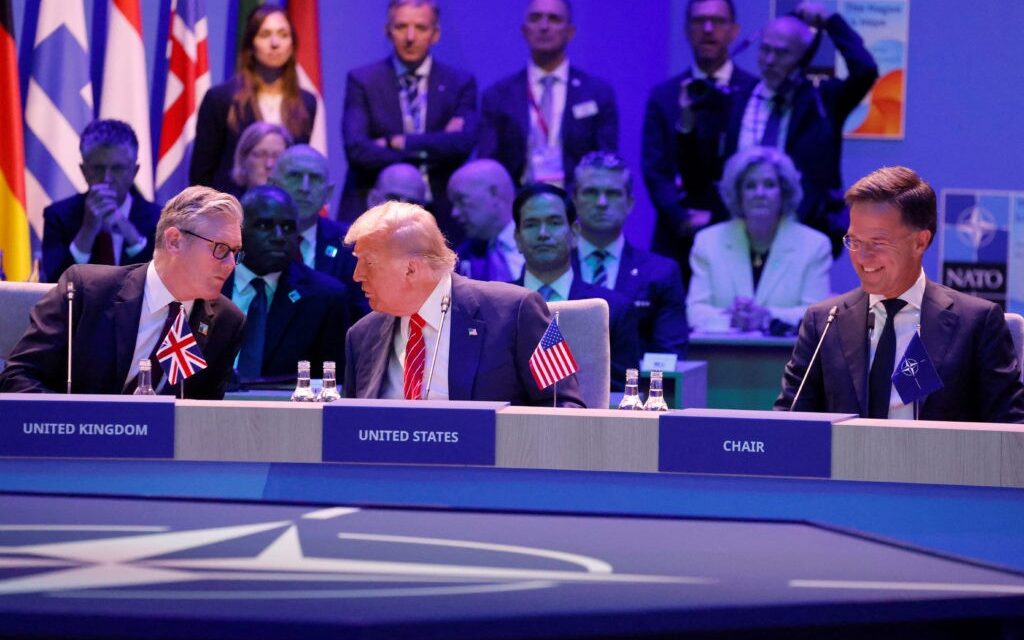
Trump’s efforts to create more Lebensraum—a concept of territorial expansion popularized by the Nazis, who used it to justify aggressive expansion into Eastern Europe for German settlement, resources, and racial dominance—are creating special problems for European countries that rely on NATO as their security guarantees. The alliance is turning out to be not just a shield but also a trap. Dependence on NATO means European countries can’t challenge the United States when it threatens their national security.
A New Imperial Order
Nathalie Tocci, director of the Institute of International Affairs in Italy, described Trump as pursuing a policy that is “consistently imperial” which will allow other empires, such as Russia and China, to flourish. Tocci added, “Certainly it’s more comfortable for Putin and Xi Jinping to be their imperial selves where that’s the new norm.”
Proposed European Responses
Writing in Purpose Magazine, Dalibor Rohac, a senior fellow at the American Enterprise Institute, advocates a similar set of harsh punishments that would make the United States respect the sovereignty of European countries, including curtailment of weapons sales, refusal to allow the United States to use European military bases for missions in the Middle East, and reduction of trade ties. Rohac also suggests, “A further step would be the sanctions lists. Travel bans and asset freezes would have to be imposed on key administration figures as well as on its financial backers.”
A Timid Response Amidst Growing Threats
These proposals are certainly commensurate with the threat US imperialism poses not just to Europe but to the safety of the world. But it is unlikely that European leaders have the boldness to execute them. So far, their response to Trump’s transgressions has been meek tut-tutting. In a mewling interview last weekend, UK Prime Minister Keir Starmer refused even to say that the US violated international law by invading Venezuela. Asked about Trump’s threats against Greenland, French President Emmanuel Macron said, “I cannot imagine a scenario in which the United States of America would be placed in a position to violate Danish sovereignty.” These are not leaders who seem prepared to take radical actions to challenge Trump’s lawlessness.
Europe’s Stark Choice: Resistance or Surrender
But this timidity may not withstand Trump’s ruthless power politics. European leaders, not for the first time, are trying to fend off an aggressive, expansionist authoritarian power through appeasement. There is little reason to think such appeasement will work. Trump will keep pushing for more. Given this dynamic, Europeans face a stark choice: resistance or surrender. The open question is whether the spirit of resistance is strong enough for them to take the radical steps necessary, which involve not just standing up to Trump but also remaking their national security policies. Hence, they are no longer dependent on the United States’ power.