By Danny R. Johnson – Political News Editor
One hundred seventy-four years ago, Frederick Douglass—the great American statesman and leading 19th-century abolitionist—delivered a powerful speech challenging the sincerity of the U.S. government’s commitment to enslaved Black people:
“Fellow-citizens, pardon me, allow me to ask, why am I called upon to speak here to-day? What have I, or those I represent, to do with your national independence? Are the great principles of political freedom and of natural justice, embodied in that Declaration of Independence, extended to us? And am I, therefore, called upon to bring our humble offering to the national altar, and to confess the benefits and express devout gratitude for the blessings resulting from your independence to us?
Would to God, both for your sakes and ours, that an affirmative answer could be truthfully returned to these questions! Then would my task be light, and my burden easy and delightful.
…But, such is not the state of the case. I say it with a sad sense of the disparity between us. I am not included within the pale of this glorious anniversary! Your high independence only reveals the immeasurable distance between us. The blessings in which you, this day, rejoice, are not enjoyed in common. — The rich inheritance of justice, liberty, prosperity and independence, bequeathed by your fathers, is shared by you, not by me… This Fourth of July is yours, not mine…”
Excerpts from a speech on the “Meaning of the Fourth of July” delivered by Frederick Douglass in Rochester, New York, July 5, 1852.
On November 1, 1872, Susan B. Anthony entered a barbershop in Rochester, N.Y., that doubled as a voter registration office and insisted she had as much right to vote as any man. Startled officials allowed her to register after she threatened to sue them. Four days later, she cast a ballot for Ulysses S. Grant for president. She was arrested and charged with voting illegally. Before the case went to trial in June 1873, she gave the speech below in 29 nearby towns. A federal judge was unmoved and ordered the jury to find her guilty:
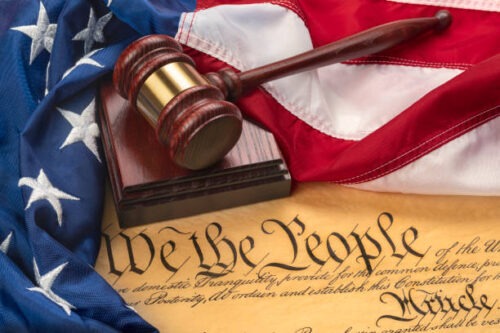
“It was we, the people; not we, the white male citizens; nor yet we, the male citizens; but we, the whole people, who formed the Union. … Men, their rights and nothing more; women, their rights and nothing less.” ―Susan B. Anthony.
The 19th Amendment, which secured the required 36 state approvals and took effect on August 18, 1920, with certification following on August 26, 1920. Its ratification marked a major legal and social milestone by guaranteeing that citizens could not be denied the right to vote because of sex, reflecting the dedication and resilience of generations of women activists.
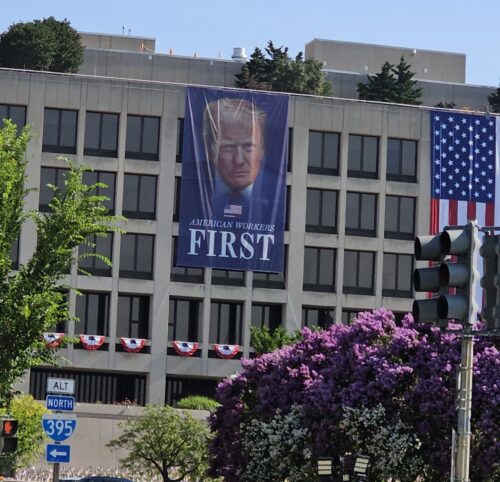
President Donald Trump and the Republican Party attempted to end birthright citizenship through an executive order but failed. The 14th Amendment guarantees birthright citizenship and limiting it would require a constitutional amendment approved by supermajorities in Congress and ratified by the states.
Constitutional Foundation
In the United States, birthright citizenship rests primarily on the 14th Amendment, ratified in 1868, which declares that all people born or naturalized in the United States and subject to its jurisdiction are citizens of both the nation and the state where they live. The Amendment was adopted to repudiate Dred Scott v. Sandford (1857) and has long been understood to cover children born in the United States to immigrant parents, regardless of those parents’ legal status. The Supreme Court reinforced this principle in United States v. Wong Kim Ark (1898), recognizing U.S. citizenship for children born in the country to noncitizen parents, with narrow exceptions such as children of foreign diplomats or enemy occupiers.
Recent Legal and Political Developments
In January 2025, President Trump issued Executive Order 14160, seeking to deny birthright citizenship to children born in the United States to parents who were unlawfully or temporarily present. Federal courts quickly challenged the order, and the Supreme Court later struck it down in Trump v. Barbara (2026), reaffirming that such children are citizens at birth under the 14th Amendment. After the ruling, Trump and some Republican lawmakers urged Congress to pursue legislation or a constitutional amendment restricting birthright citizenship. Yet changing the Constitution would require approval by two-thirds of both the House and Senate and ratification by three-fourths of the states, making such a change highly difficult.
As America marks its 250th anniversary, the U.S. Constitution—the foundation of the nation’s democracy, liberty, and rule of law—faces challenges from leaders sworn to defend it “against all enemies, foreign and domestic.” Actions and rhetoric from Trump and his Republican allies have prompted legal scholars, historians, and civil rights organizations to warn of potential threats to the establishment of constitutional norms. Although interpretations vary across the political spectrum, many experts contend that these efforts have tested the foundations of constitutional governance, the separation of powers, and long-standing democratic safeguards.
Despite efforts by the Trump administration and the Republican Party to bypass or violate the U.S. Constitution, we still have reason for hope and determination. The struggles of the men, women, and American patriots highlighted in this article remind us that progress is possible. But victory will require all Americans who believe in the Bill of Rights guaranteed by the Constitution to remain engaged and, as Dr. Martin Luther King Jr. urged in his March 1968 sermon, “remain awake through a great revolution.”