By SDCN Staff
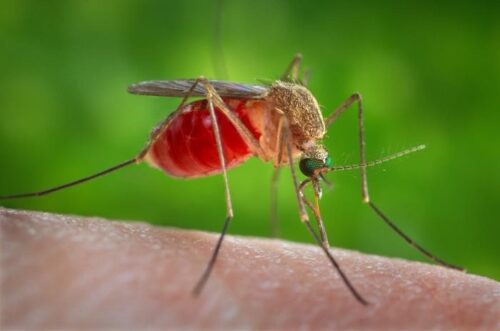
San Diego, CA–The County will conduct overnight mosquito-control treatments in Coronado this week to reduce the number of adult mosquitoes and help prevent the potential spread of West Nile virus.
The ultra-low-volume pesticide treatments will be applied by truck to approximately 6,000 properties within an area bounded by Second Street to the north, Ocean Boulevard to the south, F Avenue to the west and Glorietta Boulevard to the east.
The treatments are scheduled from 1 to 6 a.m. on Sept. 25, and Sept. 26. Additional treatments may be conducted the following week, depending on mosquito activity and weather conditions.
The County’s Vector Control Program will use AquaDuet, a pesticide designed to mimic naturally occurring insecticides found in chrysanthemum flowers. The product is approved by the U.S. Environmental Protection Agency and, when applied according to label directions, is not expected to pose a risk to people or pets.
The pesticide mist is practically invisible and dissipates in less than 30 minutes. Treatments will be conducted during early morning hours when fewer people are outdoors.
The County recommends that beekeepers and people who keep insects or fish outdoors cover their habitats during treatment. Beekeepers registered with the County Department of Agriculture, Weights and Measures can request advance notification of treatments in their area.
County mosquito surveillance detected elevated mosquito activity in Coronado, including mosquitoes that tested positive for West Nile virus.
As of Sept. 16, there have been 11 reported human cases of West Nile virus in San Diego County this year, including three Coronado residents. The County said the number of local infections is the highest since 2016.
Most people infected with West Nile virus do not develop symptoms. Those who do become ill can experience fever, headache, body aches, joint pain, vomiting, diarrhea or rash. In rare cases, the virus can cause severe illness or death. People experiencing symptoms should seek medical attention.
County officials are urging residents to follow the “Prevent, Protect, Report” guidelines to reduce mosquito activity and protect themselves from mosquito-borne diseases.
Residents should eliminate standing water around their homes by emptying or removing items that can collect rainwater or water from landscape irrigation. These include plant saucers, buckets, garbage cans, children’s toys, old tires and wheelbarrows.
Mosquitofish, which are available free through the County’s Vector Control Program, or mosquito dunks can be used to control mosquito larvae in backyard water sources such as stagnant swimming pools, rain barrels, ponds, fountains and horse troughs.
Residents can also reduce their risk of mosquito bites by wearing long sleeves and pants or using insect repellent when outdoors. Recommended repellents include products containing DEET, picaridin, oil of lemon eucalyptus, para-menthane-diol, 2-undecanone or IR3535.
Window and door screens should be kept in good condition and properly secured to prevent mosquitoes and other insects from entering homes.
Residents are encouraged to report increased mosquito activity, neglected green swimming pools and other potential mosquito-breeding sites, as well as dead birds such as crows, ravens, jays, hawks and owls.
Reports can be made to the County Vector Control Program at (858) 694-2888 or by email at vector@sdcounty.ca.gov.