By Danny R. Johnson – Political News Editor
“I doubt that Russia, China, or the United States has an army as victorious as the army of democracy of this country. A hug to the soldiers, men and women, of our army.”
Luiz Inácio Lula da Silva/From his victory speech after being reelected as President of Brazil on October 25, 2026
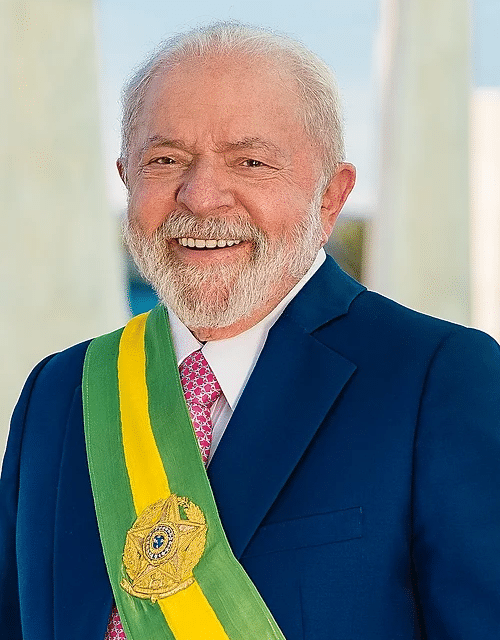
WASHINGTON, DC – After three of the most intense weeks in Brazilian political history, Luiz Inácio “Lula” da Silva will return to the presidency. Although he lost the first round earlier this month, he rebounded to win a historic fourth term, defeating Flávio Bolsonaro—the corrupt eldest son of former president and convicted coup plotter Jair Bolsonaro—by 4.4 million votes, 51.79 percent to 48.21 percent. The result confirms Lula as the foremost popular leader of his generation and one of history’s most talented politicians.
Despite Big Tech—especially Meta—favoring the far right through its algorithms, the left won the online battle. Much of the credit belongs to Lula’s centralized digital army of 10.8 million people, assembled through a WhatsApp channel in under three weeks and led by Minas Gerais Federal Deputy André Janones, a titan of Brazilian social media. Janones not only turned the algorithms against the far right but also reclaimed national symbols, including Brazil’s football jersey.
Lula is a generational leader shaped by a historic working-class movement, while Janones is a digital strategist uniquely rooted in Brazil. Even so, their victory offers vital lessons for a left seeking not only to defend against the far right but also to counterattack by combining street-level organizing with a coordinated online force.
The left chose the opposite strategy. By coordinating its communications and message, it reached undecided voters, first-round abstainers, those who had cast null ballots, and even some Flávio supporters. Turnout rose sharply. The lesson is clear: to mount an effective digital counterattack against the far right, the left must coordinate its communications and build a welcoming online community for alienated people who want to do more than shout into the void.
Here are several lessons Democrats can apply in 2028, some of which are already shaping the 2026 midterm elections:
1. Focus relentlessly on economic concerns
Lula’s campaign emphasized jobs, wages, inflation, hunger, and living standards rather than making the election solely a referendum on his opponent. Many analysts credited his ability to connect economic hardship to concrete policy proposals.
Lesson for Democrats: Voters often respond more strongly to messages about affordability, wages, healthcare, and economic security than to abstract ideological arguments.
2. Build broad coalitions
Lula did not win by appealing only to the left. He assembled a wide coalition that included centrists, moderate conservatives, business leaders, and voters primarily concerned with defending democratic institutions. His running mate, Geraldo Alckmin, had previously been a center-right rival.
Lesson for Democrats: Winning close elections may require attracting independents and moderate voters, not just energizing the base.
3. Defend democracy without making it the only message
Lula framed the election partly as a defense of democratic norms, but he paired that message with economic and social issues.
Lesson for Democrats: Warnings about threats to democracy may resonate more when combined with a compelling vision of how government will improve everyday life.
4. Invest heavily in turnout
Lula’s victory depended on mobilizing key groups that are often less likely to vote consistently, including lower-income voters, young people, and urban voters. Reports noted his campaign’s success in expanding support and participation between rounds.
Lesson for Democrats: Registration, turnout operations, and direct voter contact can be as important as persuasion.
5. Emphasize practical achievements
Political observers pointed to Lula’s ability to campaign on social programs and economic measures that voters could easily understand and evaluate.
Lesson for Democrats: Voters may reward tangible results more than long lists of policy proposals.
6. Avoid writing off culturally conservative voters
Lula improved his performance among some voters who did not fully agree with him ideologically but were persuaded on economic or governance issues.
Lesson for Democrats: Not every election is won by ideological conversion. Some voters can be won over issue by issue.
Brazil and the United States have very different political systems, party structures, media environments, and voter coalitions. What worked for Lula cannot be transplanted directly. Still, the broad themes of economic populism, coalition-building, turnout mobilization, and connecting democratic values to everyday economic concerns are among the most cited lessons from his victories.
If current trends continue to favor Democrats winning the House and possibly the Senate, Lula’s strategy could provide a blueprint for victory in 2028.