

By Danny R. Johnson – Jazz and Pop Music Critic
LOS ANGELES–The late William “Bill” Adam, a trumpeter, pedagogue, and Professor Emeritus at Indiana University, was an esteemed teacher of trumpeters for decades.
During an interview, a jazz historian asked him, “What have you learned from decades of research on every aspect of the trumpeter’s work?” Adam replied, “You must put yourself inside the music.”
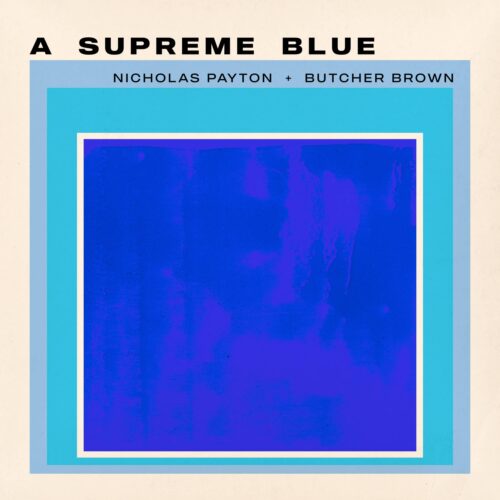
If Adam were alive today to hear Nicholas Payton and the Richmond, Virginia-based band, Butcher Brown’s album, “A Supreme Blue,” scheduled for release on July 24, 2026, on Concord Jazz, he would likely give it his full approval. And that the band placed itself inside the music.
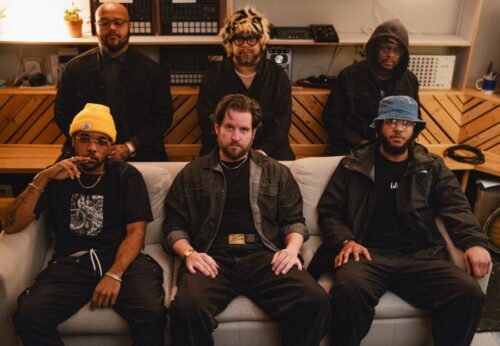
On “A Supreme Blue,” the ensemble unites a powerful group of gifted artists who transform the intricate melodies of Miles Davis and John Coltrane classics into a joyful and inspirational musical statement: Nicholas Payton on trumpet, Rhodes, piano, vocoder, vocals, and thumb piano; Tennishu on tenor saxophone; Morgan Burrs on guitar; DJ Harrison on keyboards, melodica, and guitar; R4ND4ZZO on bass guitar and synth bass; and Corey Fonville on drums and percussion. The album was conceived by Nicholas Payton and produced by Payton and Butcher Brown.
From the opening notes, the ensemble reimagines Miles Davis’ jazz masterpiece “So What.” Much as Davis expanded the expressive possibilities of every instrument around him, Payton and Butcher Brown push even further. As the opening track on Davis’s best-selling “Kind of Blue,” recorded on August 17, 1959, “So What” is widely known; here, Payton and Butcher Brown ingeniously blend fusion and modal techniques to enrich its harmonic structure. The result is a classic modal jazz re-interpretation built on strikingly simplified means.
John Coltrane’s “Psalm” was inspired by his poem of the same name, which appeared in the liner notes for his 1964 masterpiece “A Love Supreme”. The ensemble offers a “musical narration” of the poem, with the instruments giving voice to its words while creating a rich, rhythmically free backdrop. Coltrane composed “A Love Supreme” as a deeply personal spiritual prayer, reflecting his growing religious convictions in the mid-1960s. The suite’s four movements—”Acknowledgment,” “Resolution,” “Pursuance,” and “Psalm”—trace his journey from recognizing the divine to expressing gratitude. “Psalm” serves as the culmination: a moment of celebration and revelation.
The nine tracks on the “A Supreme Blue” album approached Miles and Coltrane’s classics with a clear goal: to arrange the music to show how freely it could move. The two had a remarkable ability to bend, stretch, and reshape musical ideas, and the ensemble honored that originality. In doing so, Payton and Butcher Brown seemed to acknowledge Coltrane and Miles for granting them the freedom to explore. That spirit of freedom runs through this album.
Payton, a GRAMMY-winning artist born and raised in New Orleans, Louisiana, is a celebrated jazz musician and multi-instrumentalist known for his trumpet mastery and contributions to modern jazz and Black American Music. The son of bassist Mr. Walter Payton and pianist-vocalist Mrs. Maria Payton began playing trumpet at age four. He was performing professionally by age ten, joining James Andrews’ All-Star Brass before later working with guitarist Danny Barker at The Famous Door on Bourbon Street. He enrolled at the New Orleans Center for Creative Arts and then at the University of New Orleans. Payton became a thoughtful, accomplished artist who carried forward his parents’ guidance to use his gifts to bring people together and tell the story of the Black experience through the spoken word and music.
Butcher Brown has been described as a throwback to 1970s jazz-funk fusion. In contrast, others define the group’s sound as a blend of jazz, hip-hop, soul, funk, and R&B. National Public Radio has noted that the band moves beyond genre boundaries with the ease of seasoned musicians whose long collaboration lets them shift from one groove to another without losing momentum. Discussing the band’s sound and evolution, the band has cited influences including D’Angelo, the Headhunters, the Miles Davis Second Quintet, Return to Forever, the Robert Glasper Experiment, the Roots, Spyro Gyra, and Weather Report.
In September 2020, Butcher Brown’s cover of Little Richard’s “Rip It Up” was chosen as the theme song for Monday Night Football. In 2024, the band won the third annual Newlin Music Prize for Solar Music. The following year, Butcher Brown released Letters from the Atlantic, featuring guest artists Yaya Bey, Melanie Charles, Leanor Wolf, Mia Gladstone, Victoria Victoria, Nicholas Payton, and Neal Francis.
Nicholas Payton and Butcher Brown A SUPREME BLUE
Two of the Greatest Albums Ever Made, as You’ve Never Heard Them Out digitally July 24 and on vinyl August 14 via Concord Jazz New single “Blue In Green” available now: Listen / Watch Album pre-order/save.
Previously released performance videos: “All Blues” “Resolution.”