By Danny R. Johnson – Political News Editor
WASHINGTON, DC–Although many people associate Memorial Day weekend with cookouts, beach trips, and relaxation, the holiday’s deeper purpose—shaped in part by commemorations led by formerly enslaved African Americans—is to honor the sacrifice and service of U.S. Armed Forces members.
For many African Americans, Memorial Day brings together remembrance and celebration, and that balance is worth preserving. People of all backgrounds can honor those who gave their lives in service to the nation while also celebrating their legacy.
Though Memorial Day is widely seen as the unofficial start of summer and a time for gathering with others, it is also an occasion to recognize African Americans’ historic role in shaping the holiday after the Civil War. Remembering that history helps shape our future. Black Americans helped build this nation and helped save it.
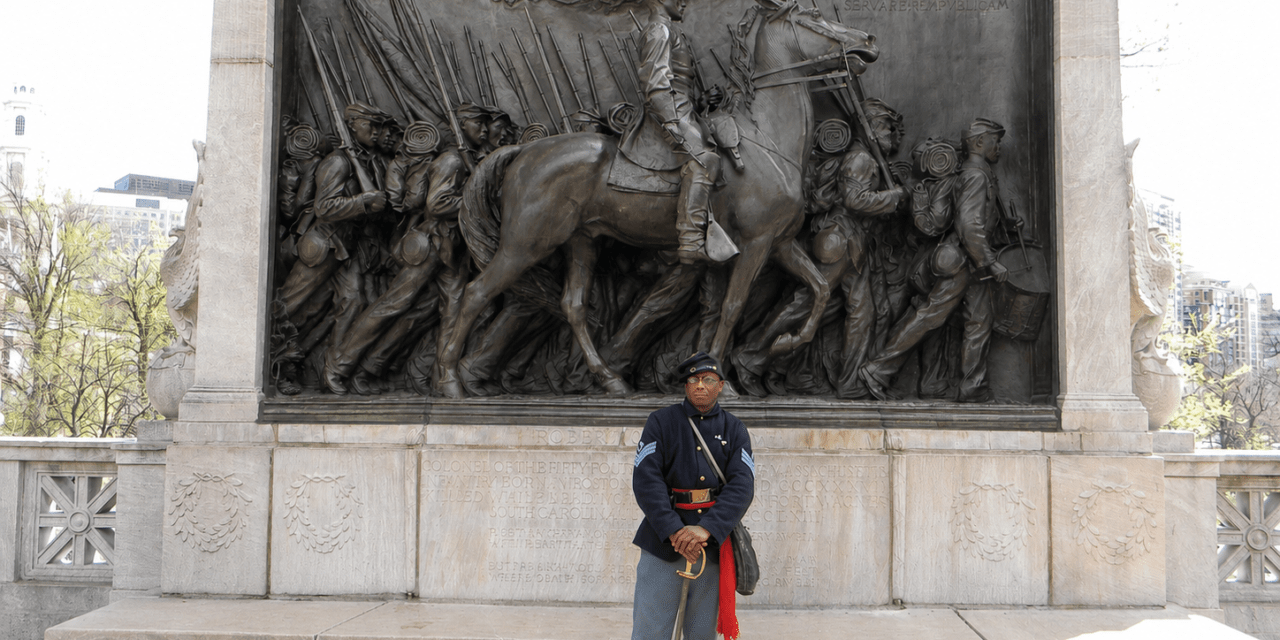
On May 1, 1865, freed people in Charleston, South Carolina, gathered at a racetrack to honor 257 Union prisoners of war whose graves had been neglected by the retreating Confederate Army, according to the National Park Service. The largely African American crowd watched members of the 35th and 104th United States Colored Troops and the renowned 54th Massachusetts Infantry Regiment perform drills, then listened to speeches about the meaning of the Civil War, the deadliest conflict in American history.
When the observances were done, the crowd proceeded to lay flowers on the graves of the men out of respect for their service to the Union. “Those ceremonies came to be known as Decoration Day,” said Frank Smith, executive director of the African American Civil War Memorial Freedom Foundation and Museum in Washington, DC. “Similar observances later took place in places like South Georgia and Mississippi. People laid flowers on the graves of Black and white Union soldiers in the South. They were soldiers who fought for our freedom and helped transform the South from a slavocracy into a democracy.” Three years after the Civil War, in 1868, Memorial Day was formally established by Union General John A. Logan through General Order No. 11, making the annual decoration of graves its central observance.
In the decades that followed, Memorial Day changed. Seeking reconciliation between North and South, President William McKinley opened national cemeteries to Confederate soldiers, according to the National Park Service. Later, shared service in the Spanish-American War and World War I helped turn Memorial Day into a broader observance honoring all Americans killed in the line of duty.
Even so, the Black role in shaping Memorial Day continued to be recognized despite the racial segregation that lasted from the late 19th century into the mid-20th century. According to the National Park Service, M.C. Maxfield highlighted the contributions of African American soldiers in the June 3, 1911, edition of The Washington Bee, a Black-owned newspaper. “The Constitution that governs us was sustained by the sword and bayonet,” Maxfield said at a 1911 District Memorial Day ceremony. “The Black soldier played an important part, and as evidence of their valor, look at yonder graves.”
The African American Civil War Memorial and Museum, located in Washington, DC, hosts a Memorial Day commemoration each year. The ceremony includes a wreath-laying and, at times, a contingent of Black motorcyclists known as Buffalo Thunder, who honor the Buffalo Soldiers that served on the American frontier in the 1800s, participating on the Sunday before Memorial Day.
Sacrifice of Black Vietnam Vets
Another important site for honoring African Americans who died in war is the Vietnam Veterans Memorial in Northwest Washington. It includes the Three Servicemen statue, a bronze sculpture by Frederick Hart that depicts a group of soldiers, including one African American—the first representation of a Black person on the National Mall.
The Department of Defense reported that 7,243 African Americans died during the Vietnam War, which escalated from 1965 to 1973. Black service members accounted for 12.4% of U.S. casualties in Vietnam, though they made up only 10% of those enlisted. Many served while the Civil Rights Movement unfolded at home from 1954 to 1968.
“We are fighting over here against the Viet Cong and at home against discrimination,” Captain Clifford Alexander Jr. said in the May 26, 1967, edition of Time magazine. “Together we can win in both places.”
The first casualty of the American Revolutionary War was a Black man named Crispus Attucks, who died in 1770. Black soldiers were the ones who helped America win the Battle of New Orleans and helped the Union win the Civil War. They are Americans too.
In these troubled times, Memorial Day 2026 reminds millions of Americans of the remarkable, often overlooked contributions of Black soldiers, sailors, and airmen. Black Americans remember this legacy deeply, and so do many white Americans.
Some of their triumphs and defeats were presented in Hollywood’s vintage World War II and Vietnam movies. Included were Home of the Brave (1949), Red Ball Express (1952), Men in War(1957), All the Young Men (1960), The Boys in Company C (1978), Apocalypse Now (1979), A Soldier’s Story (1984), Platoon (1986), Cadence (1990), and The Tuskegee Airmen (1993).
Many Blacks also served our country with honor in the Civil War, World War I, Korea, Operation Desert Storm, and Afghanistan. Their names include Gen. Colin Powell; Gen. Lloyd Austin; Lt. Gen. Benjamin O. Davis—first Black graduate (1936) of West Point; former New York City Mayor David Dinkins; politicos Charles Rangle, Percy Sutton and Roscoe Brown; former Detroit Mayor Coleman Young; Gen. Daniel (Chappie) James, and Lt. Gen. Calvin Waller, deputy commander-in-chief of Central Command in Saudi Arabia during Desert Storm.
In charge of all U.S. ground troops in the area, Waller gained prominence in December 1990 by observing that American infantry would not be ready for combat against Iraq until mid-February. Although it caused consternation, Waller was heeded, and the successful ground war did not begin until Feb. 23, 1991.
Heroic Feats at Pearl Harbor
Perhaps the best-known Black American military man killed in World War II is Doree Miller, who distinguished himself on Dec. 7, 1941, during the Japanese sneak attack on Pearl Harbor.
A mess attendant aboard the blazing U.S.S. West Virginia, Miller somehow carried his wounded white commander to safety. Then, ignoring the onslaught of attacking dive bombers and torpedo planes, he made his way topside to the burning deck, manned an anti-aircraft battery, and shot down four Japanese planes.
Ironically, Miller’s heroism, chronicled in the 1970 Hollywood blockbuster Tora! Tora! Tora violated Navy orders of the era, which prohibited Blacks from firing weapons on shipboard. However, in recognition of his bravery, he was personally awarded the Navy Cross, its highest honor, by Adm. Chester W. Nimitz.
Sadly, Miller did not survive the war. He was killed on Nov. 24, 1943, when his escort carrier, Liscome Bay, was sunk by Japanese torpedoes off the Gilbert Islands. Still a steward, he was waiting on white officers when he died. In Miller’s honor, a destroyer was commissioned as the U.S.S. Doree Miller in June 1972, and a new Navy housing area at Pearl Harbor also bears his name—fitting reminders of this Black sailor’s heroic deed.
The contributions of Black service members throughout American history must not be overlooked in today’s politically charged climate. Black men, women, and children across the nation risked their lives in the fight for civil rights—seeking freedom through the courts, the ballot box, the press, and public protest. American democracy has always been imperfect, but the Black struggle for equality shows that every person carries a light that, in a democracy, can help