The Wall Street Journal editorial warns against blaming all Afghan refugees after the D.C. ambush on two National Guard members.
Danny R. Johnson – Political News Editor
The Wall Street Journal criticized Donald Trump’s “collective punishment” of Afghans following the deadly ambush on National Guard members in D.C., urging the White House not to penalize thousands for the actions of one individual.
After Wednesday’s attack, which resulted in one Guard’s death and left another critically injured, Trump quickly portrayed the shooting as justification for expelling immigrants from the country.
However, the Journal’s editorial, published Thursday afternoon in the Rupert Murdoch-owned paper, argued that the tens of thousands of Afghans who are “building new lives… shouldn’t be blamed for the violent act of one man.” The editorial added that punishing all Afghans “won’t make America safer.”
It pointed out that the alleged shooter—Rahmanullah Lakanwal, who fought alongside U.S. forces in Afghanistan before being granted asylum in 2021 under Operation Allies Welcome—should not be held as representative of all those who assisted the United States and now reside here. The Journal also warned that scapegoating could discourage future cooperation from wartime partners.
According to reports, Lakanwal had undergone CIA vetting; however, The Wall Street Journal observed that even thorough background checks are not infallible, highlighting the central policy issue of how the individual transitioned from a trusted partner to a suspect. The publication concluded that the administration’s decision to pause Afghan cases and consider large-scale removals misinterprets the actual threat and poses risks of indiscriminate punishment.
Following the incident, former President Trump linked the shooting to the 2021 Afghanistan evacuation, which included Lakanwal. Still, the Journal advised caution against using this case as justification for the mass deportation of Afghans. The article noted that while an organized withdrawal could have facilitated stronger screening measures, broad punitive actions remain inappropriate and potentially counterproductive.
After the editorial was published, Trump doubled down, using a Thanksgiving call with U.S. troops to fold the tragedy into a familiar anti-migrant tirade, promising a purge of immigrants. He followed up with a late-night Truth Social post vowing to “permanently pause migration” from “all Third World Countries,” and attacked Minnesota officials and Somali immigrants.
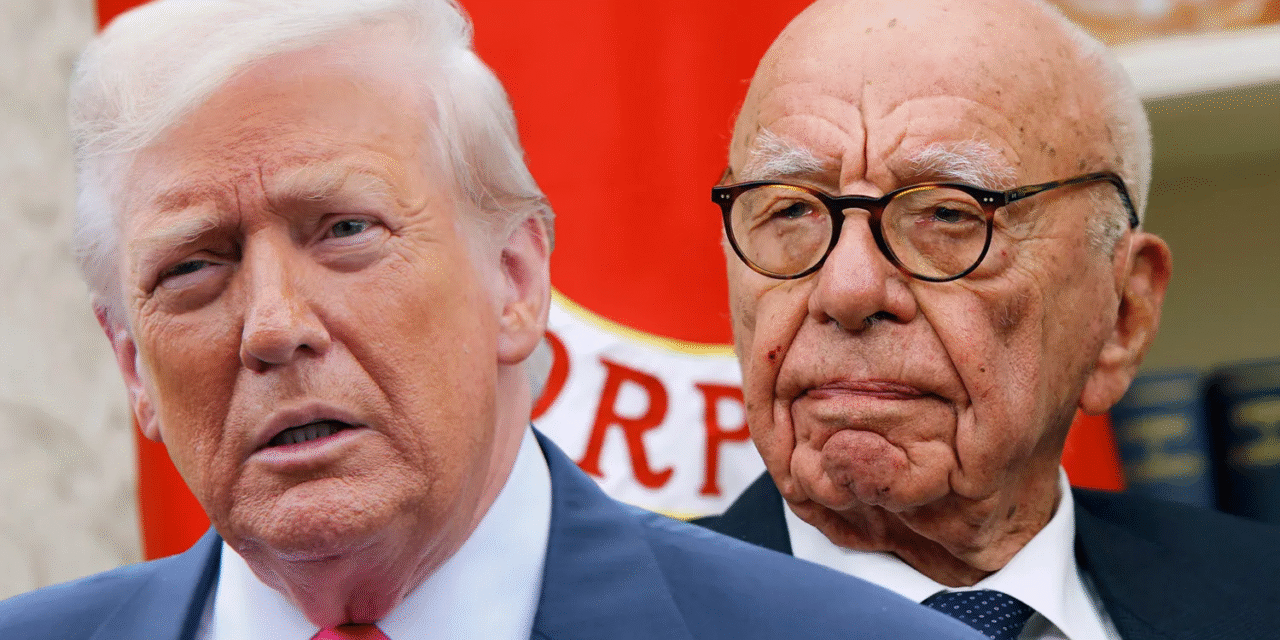
The Journal’s disagreement with Trump continues the president’s fraught relationship with Murdoch’s flagship editorial page. Last month, the Journal rebuked Trump over tariffs and the Reagan legacy, accusing him of acting like a “king” and delivering a history lesson on free trade. Earlier in November, the paper said Trump was his “own worst enemy” on the Jeffrey Epstein files saga, arguing his handling made him look like he had “something to hide.” The Journal has also warned against Trump’s “retribution” drive—writing that working for him can be “equally as dangerous” as opposing him—after John Bolton was charged over classified material, in another sharp editorial from October.
But their biggest beef was over Trump’s $10 billion defamation suit against the Journal for its reporting on Epstein’s 50th “birthday book” in July. The Journal’s legal team has moved to dismiss and accused Trump of raising “red herring” issues. Trump has asked the judge to let the case proceed.