By Danny R. Johnson – Political News Editor
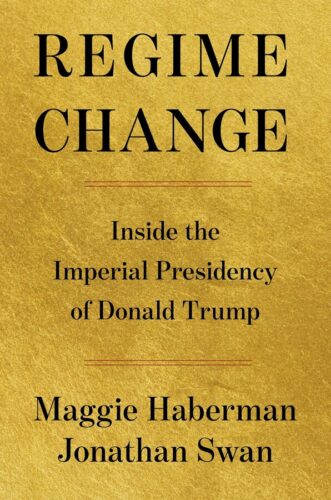
WASHINGTON – Maggie Haberman and Jonathan Swan’s latest book, “Regime Change: Inside the Imperial Presidency of Donald Trump,” drives home an undeniable reality: the United States is gripped by a constitutional crisis that now reaches every branch of government.
The nation’s core commitments to social justice, citizen empowerment, economic fairness, the rule of law, and balanced governance are not merely under pressure; they are under direct assault. After decades of deliberate efforts to dismantle those principles, deeply conservative ideologues now command significant power within government and appear determined to use it to protect Donald Trump and prevent him from ever losing power through an election.
The warning signs are no longer emerging quietly; they have been unfolding in plain sight for the past nine months. On September 25, 2025, the president signed National Presidential Security Memorandum 7, “Countering Domestic Terrorism and Organized Political Violence.” The directive opens the door for federal counterterrorism powers to target Americans whose sponsors are labeled “anti-American,” “anti-capitalist,” “anti-Christian,” or “hostile to traditional American views on family, religion, and morality.” No law permits the federal government to recast protected political speech as terrorism, yet NPSM-7 moves dangerously close to doing exactly that.
Another Quiet Expansion of Executive Power
While much of the country was distracted this past week, the Trump administration quietly launched another sweeping and alarming initiative.
How Federal Spending Is Supposed to Work
Under normal legislative procedures, federal funding follows a clear legal path: taxpayers pay into the system; the IRS collects those taxes; and the money is deposited into the U.S. General Fund.
From there, Congress authorizes and appropriates funds to federal agencies. Those agencies then distribute the money to state and local governments, community organizations, and other partners through grants or contracts.
How Agencies Allocate Funds
Some funding decisions are formula-based, such as allocations tied to population or other statutory criteria. Others rely on expert review and judgment to determine how funds should be awarded.
If Office of Management and Budget Director Russell Vought (The architect of the Heritage Foundation’s “Project 2025”) got his way, this long-standing process would be swept aside. The proposed revisions to the Uniform Guidance governing federal spending would rip grant decisions away from subject-matter experts and hand them to political appointees. The rule runs more than 400 pages and is packed with other alarming provisions.
The damage would cut across healthcare, transportation, education, food assistance, and scientific research. Funding for rural hospitals, mass transit, road and bridge repairs, special education, Head Start, the Supplemental Nutrition Assistance Program, and cancer research could all be dragged under the political control of Vought and his allies.
And why does he do what he does? The man is a devout, self-righteous Christian, but like the administration’s other delusional religious zealot, JD Vance, his Christianity is nothing you’d recognize from the Sermon on the Mount. It is a gospel of cruelty. Vought once said he wanted to put civil servants in trauma—it is clear that, if this proposed rule is enacted, it is going to traumatize millions of Americans by gutting many federal programs that serve people from coast to coast.
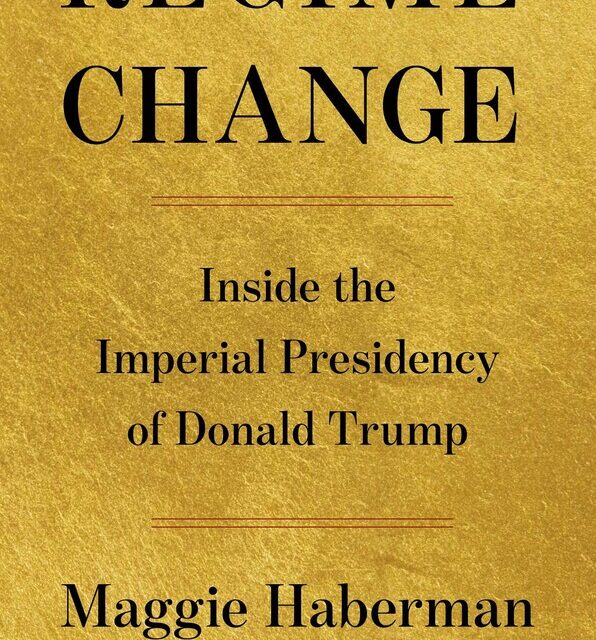
“Regime Change: Inside the Imperial Presidency of Donald Trump” examines how Trump has used presidential power, who has sought to limit him, and why those efforts have largely failed. The book argues that Trump’s authority has gone largely unchecked with the support of the Republican Party and a MAGA-aligned majority on the U.S. Supreme Court. It also documents a development more often associated with foreign capitals than Washington: a president who has altered the office itself and changed how American power is viewed at home and abroad. Taken together, Haberman and Swan present the book as both a real-time account of political transformation in the United States and a significant record of a presidency without modern precedent.