

By the University of California San Diego
(Newswise)–A multidisciplinary team of scientists led by Carlo Ballatore, Ph.D., at the University of California San Diego and Kurt Brunden, Ph.D., at the University of Pennsylvania has been awarded a $6.9 million grant from the National Institute on Aging (NIA) to prepare a potential disease-modifying Alzheimer’s treatment for future clinical trials.
In a published study about the new compound, CNDR-51997, the team found it effective in restoring brain health in mouse models of Alzheimer’s disease. CNDR-51997 was identified through a joint drug discovery program at Penn and UC San Diego that was supported by grants from the NIA.
The new grant will help the researchers demonstrate the drug’s safety in formal studies required by the U.S. Food and Drug Administration (FDA) before the initiation of human testing. By the end of the three-year grant period, the researchers hope to submit an Investigational New Drug (IND) application to the FDA that, if approved, would allow for Phase 1 clinical studies.
“Alzheimer’s is a devastating disease with very few treatment options, so we are eager to advance CNDR-51997 through the drug development process,” said Ballatore, a professor at the UC San Diego Skaggs School of Pharmacy and Pharmaceutical Sciences. “This compound has been designed to combat tau-mediated neurodegeneration and our preclinical data suggest that it could be beneficial for the treatment of Alzheimer’s and related dementias.”
Alzheimer’s disease is characterized by abnormal deposits of two types of protein in the brain: amyloid beta (Aβ) and tau. The only currently available disease-modifying treatments for Alzheimer’s, lecanemab (Leqembi™) and donanemab (Kisunla™), target Aβ deposits in the brain. Notably, there are currently no approved therapies that target pathological tau. In mice, the researchers found that CNDR-51997 reduces both Aβ plaques and tau pathology in the brain.
In addition to Alzheimer’s, there are several other diseases characterized by tau pathology, such as frontotemporal lobar degeneration, progressive supranuclear palsy, corticobasal degeneration, Pick’s disease, traumatic brain injury and chronic traumatic encephalopathy (CTE). The researchers believe that their compound could not only be a future treatment for Alzheimer’s but also for these other related diseases, collectively called tauopathies.
“Our findings that CNDR-51997 reduces both Aβ plaques and tau inclusions in mouse models suggest that the compound holds considerable promise for Alzheimer’s disease. However, there is also a great unmet need for disease-modifying drugs for the other tauopathies,” said Brunden, a research professor in the Perelman School of Medicine and director of drug discovery at Penn’s Center for Neurodegenerative Disease Research. “The potential of CNDR-51997 to address tau-related diseases beyond Alzheimer’s is another important aspect of its therapeutic promise.”
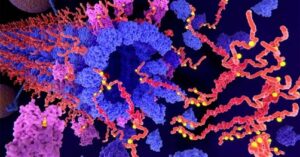
One of the functions of tau is to stabilize microtubules, dynamic tube-like structures that help give cells their shape. In neurons, microtubules play an important role in axonal transport, a process in which proteins and other cellular constituents are distributed to different parts of the long axonal extensions involved in brain function.
In Alzheimer’s disease and other tauopathies, tau becomes detached from microtubules, which causes them to become disorganized. This leads to axonal transport deficits and neuronal loss. In preclinical studies, the new compound CNDR-51997 corrects these imbalances, ultimately reducing Aβ and tau pathologies.
“This is a unique compound with desirable properties, and Dr. Brunden and I are grateful to the NIA for their continued support and the opportunity to develop this compound further through IND-enabling studies, which if successful, will lead to an IND submission,” said Ballatore.